
Flower Mound, Texas
Full-Mouth Restoration
in Flower Mound
Comprehensive restorative treatment designed to rebuild comfort, function, health, and confidence.
Comprehensive Care
What Is Full-Mouth Restoration?
Full-mouth restoration is a comprehensive approach to restoring the health, function, and appearance of your teeth when multiple areas of the mouth require treatment. It's not a single procedure — it's a carefully planned sequence of restorative steps designed to address complex dental conditions.
Patients who benefit from full-mouth restoration typically have significant wear, multiple failing fillings or crowns, broken or missing teeth, or bite-related concerns that affect daily comfort and function. The goal is always the same: to rebuild a stable, healthy foundation that supports long-term oral health.
There is no single reason patients pursue full-mouth restoration — it's often the result of gradual wear, accumulated damage, or long-deferred treatment reaching a point where comprehensive care becomes the most effective path forward.
When Restoration May Be Needed
Common situations include:
- Severely worn or eroded teeth
- Multiple failing or aging fillings and crowns
- Broken or fractured teeth
- Missing teeth affecting bite stability
- Long-term grinding or clenching damage
- Complex restorative needs across multiple areas
The Prentice Method
A Systematic Approach to Full-Mouth Restoration
Full-mouth restoration should not begin with simply deciding which teeth need crowns.
The first goal is to understand why the teeth have worn, broken, shifted, or failed. From there, Dr. Prentice develops a comprehensive plan that considers function, tooth position, bite, structure, and aesthetics together.
Each case is different, but comprehensive restoration generally follows this systematic process:
- 01
Diagnose
Understand why the breakdown occurred before deciding how to rebuild it.
A comprehensive evaluation establishes the starting point.
Dr. Prentice evaluates the teeth, existing restorations, gums, bite, jaw function, patterns of wear or breakdown, and the overall health of the dentition. Digital scans, photography, imaging, and other records are used to understand both the current condition and the factors that contributed to it.
Kois-guided risk assessment is incorporated into this diagnostic process rather than presented as a separate treatment step.
- 02
Establish the Bite
Establish a stable foundation before designing the new bite.
For some patients, the existing bite does not provide a reliable starting point for restoration.
When indicated, Dr. Prentice may use a Kois deprogrammer or other functional records to reduce the influence of the existing bite and establish a comfortable, repeatable jaw position.
This information helps determine how the teeth should relate to one another before the final restorative design is created.
- 03
Design
Plan the destination before beginning treatment.
Once the diagnostic and functional records are complete, the proposed result is designed comprehensively.
Digital scans, photography, facial references, bite records, and laboratory collaboration are used to plan tooth position, proportions, restorative space, function, and aesthetics together.
The goal is to design the entire result before individual teeth are treated.
- 04
Preview
See and evaluate the proposed design in the mouth.
When appropriate, the proposed design can be transferred into the mouth before the final restorations are created.
Using a mock-up or provisional material, Dr. Prentice can evaluate tooth length, smile position, proportions, phonetics, restorative space, and the relationship between the proposed teeth and the face.
This provides an opportunity to evaluate the design clinically rather than relying only on a computer screen or model.
- 05
Prepare & Provisionalize
Transfer the plan from the design into the mouth.
The teeth are prepared according to the planned design while preserving healthy tooth structure whenever possible.
Any necessary foundation work is completed, the preparations are digitally scanned, and provisional restorations are created to transfer the planned tooth position and bite into the mouth.
These provisionals are an important part of the treatment process—not simply temporary teeth.
- 06
Test & Refine
Refine the result before committing to the final restorations.
The provisional or prototype restorations allow the proposed result to be evaluated under real conditions.
Dr. Prentice assesses the bite, chewing function, comfort, speech, tooth position, guidance, proportions, and appearance. Adjustments can be made until the design performs as intended.
In many complex cases, a laboratory-fabricated PMMA prototype may be used for an additional level of precision and verification.
- 07
Finalize
The final restorations follow a design that has already been proven clinically.
Once the provisional design has been clinically validated, it becomes the blueprint for the definitive restorations.
The approved tooth position, contours, bite, function, proportions, and aesthetics are communicated to the laboratory so the final ceramics closely reproduce the result that has already been tested in the mouth.
The goal is not to redesign the case at the final stage. The goal is to accurately transfer the validated design into the definitive restorations.
- 08
Deliver & Protect
Deliver the final result—and protect the investment long term.
The definitive restorations are tried in, carefully evaluated, and bonded or cemented.
Dr. Prentice verifies fit, aesthetics, bite, and function and makes any necessary refinements. Follow-up visits, preventive care, hygiene, and protective therapy such as a nightguard may be recommended based on the individual patient's risk factors.
For patients exploring whether full-mouth restoration is the right direction, a consultation is the ideal starting point — an opportunity to ask questions, review findings, and understand your options before making any decisions.
Function First. Aesthetics Follow.
Many patients who seek full-mouth restoration are not simply looking for a cosmetic change.
They may be repeatedly breaking teeth or dental work, noticing significant wear, struggling with changes in their bite, or becoming frustrated with piecemeal dentistry that never seems to solve the larger problem. Others may also dislike the size, shape, position, or appearance of their teeth.
Often, these concerns are connected.
Dr. Prentice approaches full-mouth restoration by first creating a stable functional foundation. Bite, tooth position, structure, restorative design, and aesthetics are considered together so the result is designed to look natural and function predictably over time.
Treatment can restore the ability to chew comfortably and help protect the bite from further deterioration. It may include a combination of crowns, implant restorations, bridges, and other restorative solutions — all coordinated within a single, unified plan.
In the News
Featured in Living Magazine
In the October 2026 Flower Mound edition of Living Magazine, Dr. Prentice explained why comprehensive dentistry starts with understanding why teeth keep breaking — and why function and longevity come first, with aesthetics as part of the process rather than the entire purpose.
Read the Full Feature“We are trying to rebuild a system that makes sense.”
— Dr. Joshua Prentice, Living Magazine, October 2026
Why Patients Choose Prentice Dental for Full-Mouth Restoration
Technology and Precision
Complex restorative cases demand precision at every stage — from diagnosis through final restoration. Prentice Dental uses digital scanning, advanced imaging, and in-house milling technology to plan and execute treatment with a high level of accuracy.
Digital workflows allow Dr. Prentice to visualize the entire treatment plan before any work begins, helping plan how each restoration fits within the overall design. For cases that include crown restorations, our same-day crown technology can streamline individual appointments within a larger treatment plan.
This technology-forward approach reduces guesswork, minimizes adjustments, and produces crowns and ceramics that fit precisely — essential in full-mouth restoration.
Why Flower Mound Patients Trust Prentice Dental
Full-mouth restoration requires skill, continuity, and planning that demand careful coordination. At Prentice Dental, every phase of your treatment is managed by Dr. Prentice directly — from initial evaluation through the definitive work. There's no handoff, no rotating providers — just one doctor who knows your case inside and out.
As a Kois Center Graduate with Honors and three-time Best of Denton County winner for Best Family Dental Practice (2024–2026), Dr. Prentice brings advanced training in complex restorative dentistry. Combined with digital precision and in-house milling technology, patients receive care that is both thoughtfully planned and expertly executed.
Patients from Flower Mound, Lantana, Highland Village, Bartonville, and Argyle trust Prentice Dental for full-mouth restoration because they value careful planning, honest communication, and results planned for the long term.
See Real Patient Results
From full-mouth cases to single crowns, our Smile Gallery shows the precision and craftsmanship behind every case.
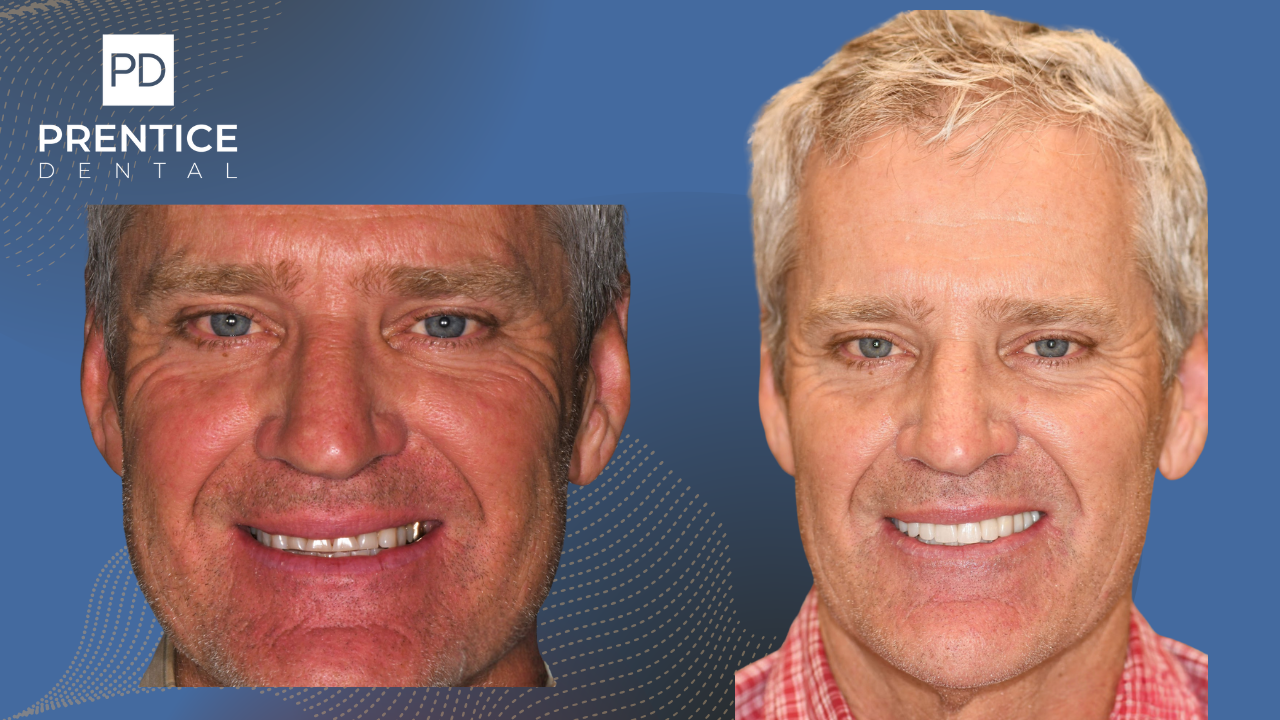
Worn Dentition Restored
Full-mouth restoration with same-day crowns rebuilt worn teeth and the bite.
Individual results vary.
Visit the Smile GalleryRestoration, Makeover, or Veneers?
Full-Mouth Restoration
Teeth are worn, breaking, or failing and the bite needs to be rebuilt.
You are hereSmile Makeover
Teeth are healthy but you want to change how your smile looks.
Explore Smile MakeoversPorcelain Veneers
You want to refine color, shape, or proportion of front teeth.
Explore Porcelain VeneersMany plans combine these — your consultation sorts out which approach fits.
Restoration Questions, Answered
What is the difference between full-mouth restoration and cosmetic dentistry?
Cosmetic dentistry focuses primarily on improving the appearance of teeth, while full-mouth restoration addresses underlying structural, functional, and health concerns — often involving the bite, multiple teeth, and long-term stability. In many cases, restoration also produces significant aesthetic improvement, but the foundation is always function and health.
How do I know if I need full-mouth restoration?
Patients who have multiple worn, broken, or failing teeth — or who experience chronic bite discomfort, difficulty chewing, or widespread breakdown — are often candidates for full-mouth restoration. The best way to find out is through a thorough consultation with Dr. Prentice, who can evaluate your specific situation and explain your options clearly.
Is treatment completed all at once or in phases?
It depends on the complexity of each case. Some cases can be completed in a focused series of appointments, while more extensive cases benefit from phased treatment that addresses the most urgent needs first and builds toward a comprehensive result. Dr. Prentice will recommend the approach that makes the most sense for your situation.
How long does full-mouth restoration take?
Treatment timelines vary depending on the scope of work involved. Simpler cases may be completed in a few months, while more complex cases can take six months to a year or longer. During your consultation, Dr. Prentice will give you a realistic timeline based on your specific treatment plan.
Can full-mouth restoration include crowns or implant work?
Yes. Full-mouth restoration often involves a combination of restorative treatments, including crowns, implant restorations, bridges, and other prosthetics. Dr. Prentice coordinates all restorative elements within a unified treatment plan to support function, aesthetics, and long-term stability.
Can I try the proposed result before the final teeth are made?
In many comprehensive cases, yes.
Dr. Prentice can use provisional or prototype restorations to transfer the proposed design into the mouth before the final restorations are completed. This allows the bite, comfort, speech, tooth proportions, function, and appearance to be evaluated and refined in real life.
In more complex cases, a laboratory-fabricated PMMA prototype may also be used for additional precision.
Once the result has been clinically validated, those records help guide the definitive restorations.
How long do full-mouth restoration results last?
Full-mouth restoration is designed with longevity in mind, but the lifespan of the individual crowns and ceramics depends on many factors, including the condition of the underlying teeth, restorative materials, bite forces, grinding or clenching, home care, and professional maintenance.
Dr. Prentice evaluates these risks during treatment planning and may recommend protective therapy when appropriate.
Is full-mouth restoration covered by insurance?
Dental insurance often covers part of the restorative work, depending on your plan and annual maximums. Treatment can sometimes be phased across benefit years when clinically appropriate. Our team will review your benefits. CareCredit and HSA/FSA payment options are available; eligibility and coverage depend on your plan.
Ready to Restore Your Smile?
Schedule a consultation with Dr. Prentice to discuss your situation and explore what comprehensive restoration can achieve for your comfort, function, and confidence.