
Clear Aligners vs. Braces for Adults: The Honest Guide (A Dentist's Perspective)
Breaking down aesthetics, speed, airway considerations, restorative implications, and the limitations of each option
The clear aligner revolution has transformed adult orthodontics—but it hasn't eliminated traditional braces. Both have distinct advantages and limitations. As someone who integrates orthodontics into comprehensive dental treatment, I've seen cases where aligners work beautifully and others where braces are the better choice. Here's an honest comparison to help you make an informed decision.
Clear Aligners vs. Traditional Braces: Which Is Better for Adults?
Quick Answer:
Neither is universally "better"—it depends on your case complexity, lifestyle, and goals. Clear aligners excel at aesthetics and convenience for mild-to-moderate cases. Braces handle complex movements better and require no patient compliance. We'll assess your specific needs to recommend the best option.
Clear aligners (Invisalign, ClearCorrect, and similar systems) use a series of custom-made, removable plastic trays to gradually move teeth. You wear each set for 1-2 weeks, then advance to the next set in the series.
Advantages of Clear Aligners
- •Virtually invisible—most people won't notice
- •Removable for eating, brushing, and special occasions
- •No dietary restrictions
- •Easier to maintain oral hygiene
- •No brackets or wires to irritate soft tissue
- •Fewer emergency appointments (no broken brackets)
- •You can visualize the treatment plan digitally before starting
Limitations of Clear Aligners
- •Requires discipline—must wear 20-22 hours daily
- •Less effective for complex movements (severe rotations, vertical changes)
- •Limited ability to move tooth roots
- •May require attachments (small tooth-colored bumps) on teeth
- •Can be lost or damaged (requires replacement trays)
- •May take slightly longer for some cases
- •Success depends heavily on patient compliance
Traditional Braces: How They Work
Braces use brackets bonded to teeth and connected by wires, with periodic adjustments to move teeth. Modern braces are smaller, more comfortable, and can use tooth-colored ceramics for better aesthetics.
Advantages of Braces
- •Can handle complex movements aligners can't
- •More precise control over tooth position
- •No compliance required—they're always working
- •Often faster for severe misalignment
- •Better for closing large gaps or moving roots
- •Can be combined with other appliances (expanders, TADs)
- •Ceramic options are reasonably aesthetic
Limitations of Braces
- •Highly visible (even ceramic brackets show)
- •Harder to maintain oral hygiene
- •Dietary restrictions (avoid hard, sticky foods)
- •Can irritate lips, cheeks, and gums
- •More frequent orthodontic appointments for adjustments
- •Risk of broken brackets requiring emergency visits
- •Social stigma for some adult professionals
Head-to-Head Comparison
Aesthetics
Winner: Clear Aligners. Virtually invisible vs. visible brackets and wires, even with ceramic braces.
Treatment Speed
Tie. Depends on case complexity. Simple cases: aligners may be slightly faster. Complex cases: braces often faster.
Comfort
Winner: Clear Aligners. No brackets or wires to irritate soft tissue. Some pressure with new trays but generally more comfortable.
Convenience
Winner: Clear Aligners. Removable for eating, cleaning, special occasions. Fewer office visits. No dietary restrictions.
Effectiveness for Complex Cases
Winner: Braces. Better control for severe rotations, vertical movements, root positioning, and closing large extraction spaces.
Predictability
Tie. Digital planning with aligners shows end result upfront. Braces offer more real-time adjustment but less preview.
Cost
Similar. Both range $4,000-8,000 depending on complexity and region. Aligners sometimes slightly more expensive.
Airway and Restorative Considerations
Airway Impact
For patients with airway concerns, the orthodontic approach matters:
- •Expansion cases: Braces with palatal expanders are often more effective at widening narrow arches to improve airway space.
- •Aligners with expansion: Newer aligner systems can achieve modest expansion, suitable for mild cases.
- •Airway-focused orthodontics: Requires careful treatment planning with 3D imaging—either method can work when designed properly.
Restorative Implications
If you're planning cosmetic or restorative work after orthodontics:
- •Aligners: Easier to coordinate—can sometimes place temporary restorations during treatment, refine aligner plan as needed.
- •Braces: Must complete orthodontics before final restorative work, but may achieve more precise tooth positioning for optimal restorative outcomes.
- •My approach: Use digital planning to coordinate orthodontic tooth position with final restorative design—ensures ideal results regardless of method.
Which Option Is Right for You?
Choose Clear Aligners If:
- Aesthetics are a top priority (professional appearance)
- You have mild to moderate misalignment
- You're disciplined about wearing them 20-22 hours daily
- You value convenience and fewer restrictions
- You want to maintain excellent oral hygiene during treatment
Choose Braces If:
- You have complex tooth movements (severe rotations, vertical changes)
- You need significant arch expansion for airway
- You prefer a "set it and forget it" approach (no compliance worries)
- Aesthetics are less important than optimal results
- Your case is better suited to braces mechanically
The Honest Truth
About 70-80% of adult cases can be successfully treated with clear aligners—but that means 20-30% are better served by braces. The key is getting an accurate diagnosis from someone experienced in both modalities.
I won't push aligners just because they're trendy if braces will give you a better result. And I won't suggest braces if your case is perfectly suited to aligners and aesthetics matter to you. It's about matching the right treatment to your specific needs.
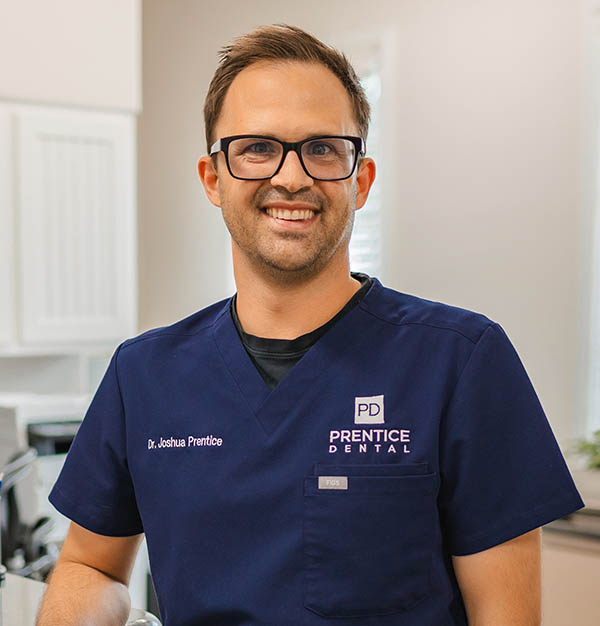
About Dr. Joshua Prentice
DDS, Kois Center Graduate with Honors
Dr. Prentice has completed advanced training at the prestigious Kois Center, one of dentistry's most respected institutions for comprehensive treatment planning and evidence-based care. He lectures nationally on complex restorative dentistry, digital workflows, and airway-centered treatment.
With over 15 years of experience in comprehensive dentistry, Dr. Prentice combines cutting-edge technology with evidence-based protocols to deliver predictable, lasting results for complex dental cases.